Gisela Koch · 12 September 2026
Tracing the Journey of Fresh Produce from Farm to Consumer in Specialized Distribution Systems
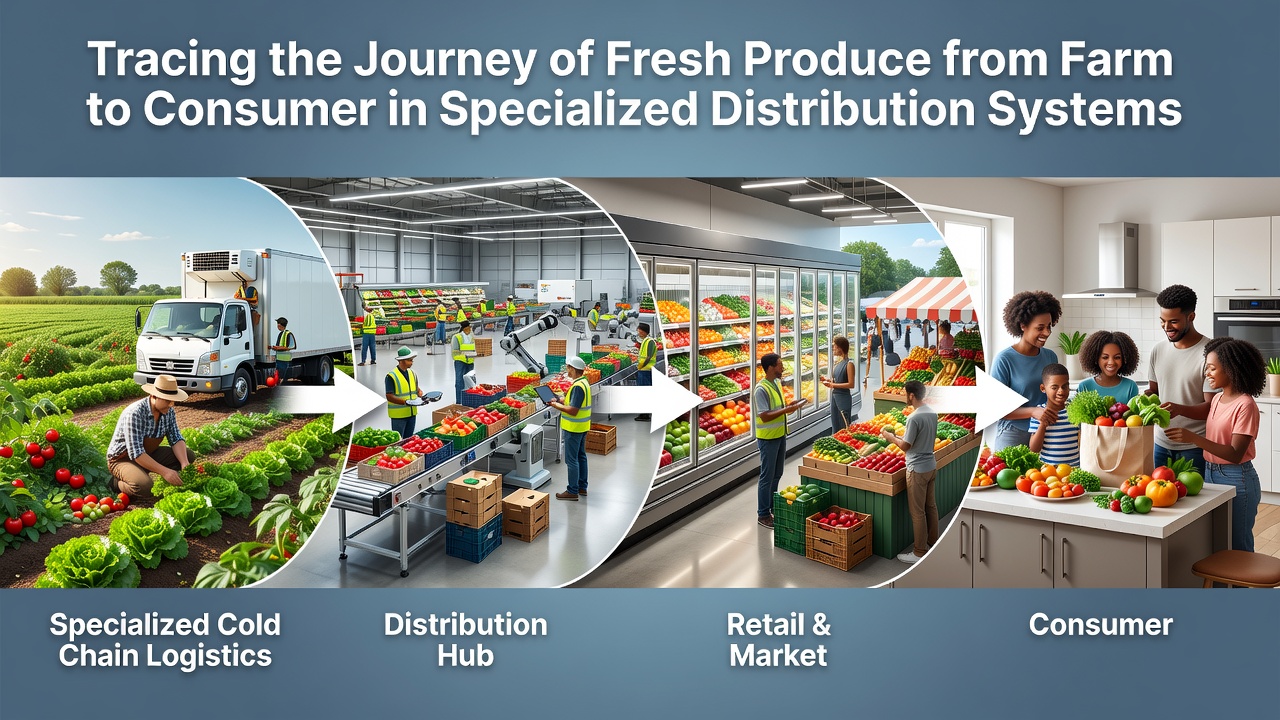
Specialized distribution systems move fresh produce through coordinated stages that preserve quality from the moment of harvest until it reaches consumers. These systems rely on temperature-controlled environments, traceability protocols, and timed logistics that minimize spoilage while meeting regulatory standards set by agencies such as the United States Department of Agriculture and the Canadian Food Inspection Agency.
Farm-Level Harvest and Initial Handling
Harvesting begins when crops reach maturity indicators documented by growers through field monitoring programs, and workers collect items during cooler morning hours to reduce field heat that accelerates respiration rates. Crews sort produce on-site to remove damaged units, then place selected items into ventilated bins that allow rapid airflow during transport to packing facilities located within a short drive of the fields. Data from harvest crews records lot numbers, variety details, and timestamps that later feed into centralized traceability databases used across the supply chain.
Post-Harvest Processing and Cooling
Once at packing houses, produce undergoes washing, grading, and cooling procedures that lower core temperatures within hours of harvest, because rapid removal of field heat extends shelf life and maintains texture. Specialized hydrocoolers or forced-air systems bring leafy greens and berries down to optimal storage ranges between 32 and 40 degrees Fahrenheit, while root vegetables follow separate protocols that avoid chilling injury. Automated sensors track humidity and temperature at every station, and records upload to digital platforms that allow downstream partners to verify compliance before loads depart.
Transportation Through Cold-Chain Networks
Refrigerated trucks and rail containers form the backbone of long-distance movement, with drivers monitoring set points that match the requirements of each commodity mix loaded onto the vehicle. Pallets sit on airflow-optimized floors that circulate chilled air around all sides of the boxes, preventing warm spots that could trigger ethylene production in sensitive items such as avocados or bananas. Route planners adjust schedules based on weather forecasts and border inspection windows, and many fleets now incorporate real-time GPS feeds that flag any deviation from temperature set points so corrective action occurs before quality declines.
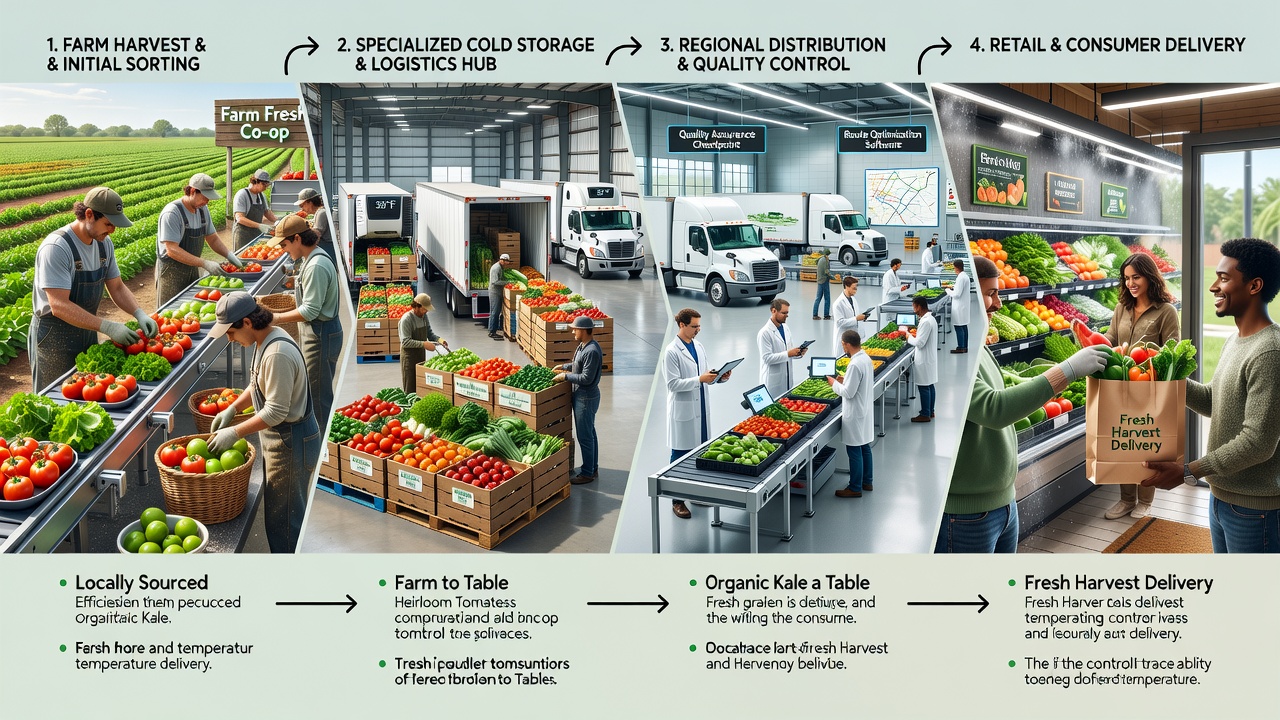
Cross-docking facilities receive incoming trailers and transfer goods to outgoing vehicles within a few hours, which reduces the number of times produce experiences temperature fluctuations. Workers scan barcodes or RFID tags at each transfer point, and the resulting data streams update shared ledgers accessible to growers, transporters, and retailers.
Warehousing and Regional Distribution Centers
Regional distribution centers aggregate produce from multiple growing regions to assemble mixed loads for retail and food-service accounts, and these facilities operate with zones that maintain different humidity and temperature settings for berries, citrus, and leafy greens. Inventory systems rotate stock according to first-expiry-first-out principles while also accounting for dynamic demand signals received from downstream partners. In September 2026 several large North American operators plan to expand automated guided vehicle fleets that move pallets between receiving docks and storage lanes, cutting labor hours and further limiting human contact with the product.
Final Delivery and Retail Integration
From distribution centers, smaller refrigerated vans or direct-store-delivery trucks carry produce to individual stores where staff transfer items to backroom coolers before moving displays onto sales floors. Retailers scan arrival times and condition notes into point-of-sale systems that link back to the original farm lot, enabling rapid trace-back if any safety concern arises. Direct-to-consumer models used by some farms and subscription box services employ insulated packaging and overnight carriers that replicate portions of the commercial cold chain, although these routes typically cover shorter distances and smaller volumes.
Traceability Standards and Regulatory Oversight
Traceability rules require each handler to maintain one step forward and one step backward records, and recent updates from the European Commission plus parallel programs in Australia have expanded the data elements that must travel with each shipment. Electronic systems now capture harvest coordinates, packing dates, and transport temperatures in standardized formats that regulators can review during audits. Research institutions including those affiliated with Wageningen University have published studies showing that integrated digital records reduce the time needed to identify the source of a contamination event from days to hours.
Conclusion
The specialized distribution systems that carry fresh produce operate through layered controls on temperature, timing, and documentation that together protect quality across thousands of miles. Each participant records and shares data that supports both operational efficiency and regulatory compliance, while physical infrastructure such as refrigerated transport and climate-controlled warehouses forms the physical backbone. Observers note that continued investment in automation and sensor networks is extending the reach of these systems into new markets and product categories without altering the fundamental sequence from field to consumer.