Gisela Koch · 26 September 2026
Cold Chain Disruptions and Their Ripple Effects on Perishable Cargo Integrity Across International Trade Routes
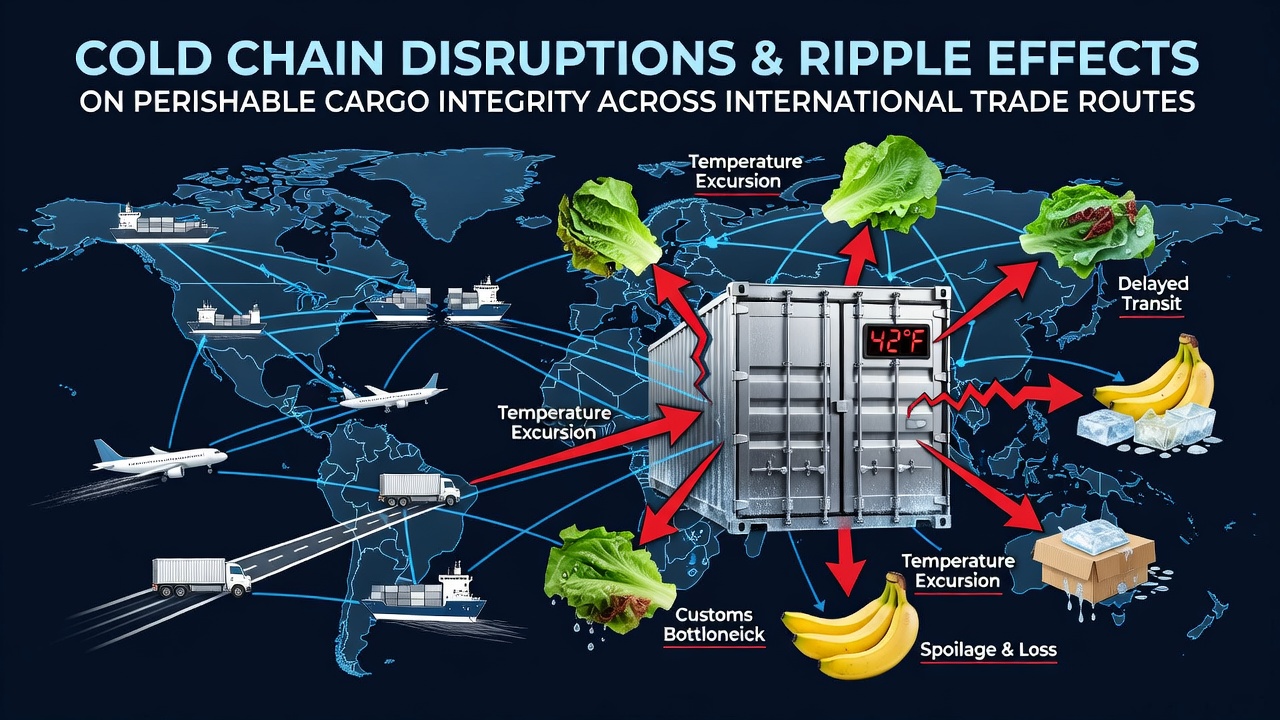
International trade in perishable goods depends on uninterrupted temperature-controlled logistics networks that maintain product integrity from origin to destination. These cold chain systems handle fresh produce, dairy, seafood, meat, and pharmaceuticals across ocean, air, and land routes where any break in the chain can lead to spoilage and financial losses. Disruptions occur when equipment fails, infrastructure experiences overload, or external events interrupt power and transport continuity.
Core Components of Modern Cold Chain Operations
Refrigerated containers, warehouses, and transport vehicles maintain specific temperature ranges required for different cargo types, while sensors and data loggers track conditions throughout each journey. Ports and airports serve as critical transfer points where cargo moves between vessels, trucks, and planes, and any delay at these hubs increases exposure to ambient temperatures. Shipping lines and freight forwarders coordinate schedules that align vessel arrivals with available reefer slots and onward connections, yet peak seasons often strain these alignments when volumes surge.
Data from the Food and Agriculture Organization shows that roughly one-third of perishable food produced globally never reaches consumers, with cold chain gaps contributing significantly to that figure. In September 2026, monitoring reports highlighted continued pressure on major trade corridors linking Latin America to Europe and Asia to North America, where reefer capacity shortages persisted amid recovering post-pandemic demand patterns.
Primary Causes Behind Recent Disruptions
Equipment malfunctions in reefer units account for a notable share of temperature excursions, particularly when compressors overheat during extended voyages through tropical waters. Port congestion creates another layer of risk because containers sit idle without consistent power connections, allowing internal temperatures to drift outside safe parameters. Severe weather events, including hurricanes and typhoons, force route diversions that extend transit times and strain fuel reserves for auxiliary generators.
Geopolitical tensions have also triggered rerouting around conflict zones, adding days or weeks to journeys originally planned for direct service. Labor shortages at key terminals reduce the speed of cargo handling, while fuel price volatility affects the economics of running backup refrigeration systems. Researchers tracking these incidents note that single-point failures often cascade when backup protocols prove insufficient under simultaneous stress.
Direct Effects on Perishable Cargo Integrity
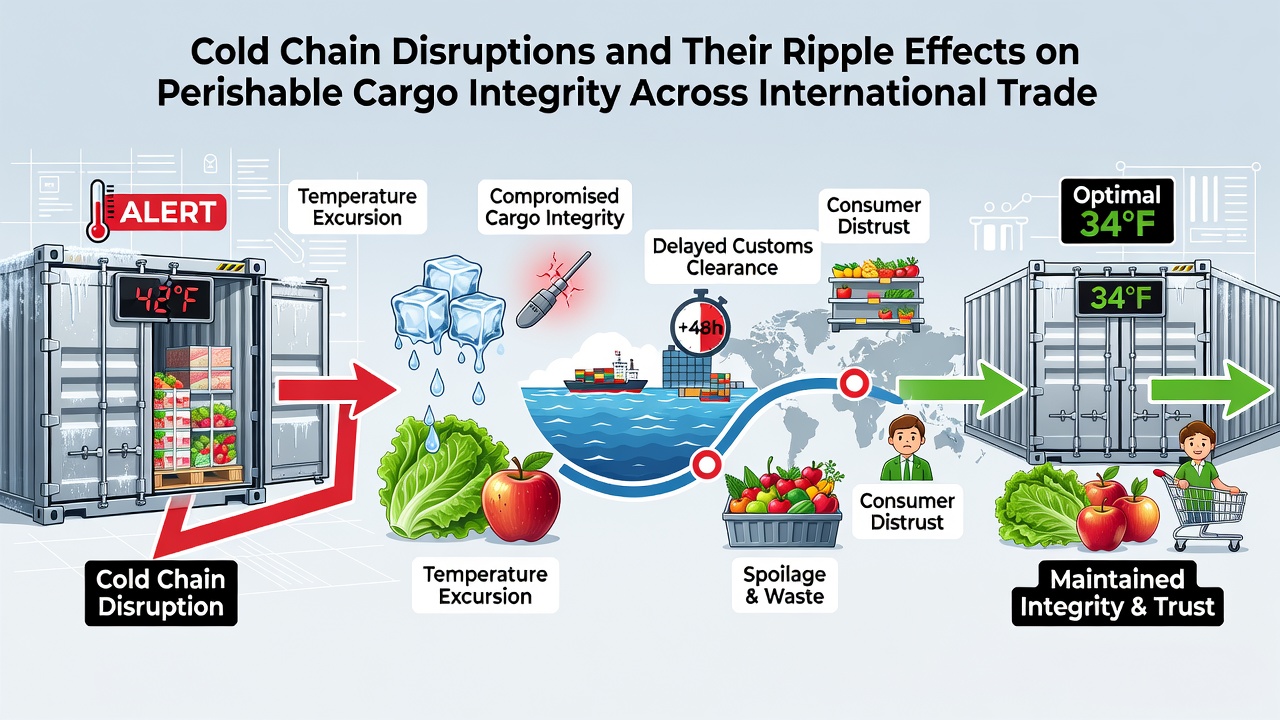
Once temperatures exceed recommended thresholds, bacterial growth accelerates in protein-rich items such as seafood and poultry, shortening shelf life even if products later return to proper cooling. Ethylene-sensitive fruits like bananas and avocados ripen prematurely during delays, resulting in quality downgrades that limit market value upon arrival. Pharmaceutical shipments face stricter thresholds because vaccines and biologics lose potency when exposed to heat, prompting regulatory rejection at destination borders.
Insurance claims data reveals that temperature-related losses represent a growing percentage of total cargo claims filed by shippers each year. Importers often discover compromised lots only after customs clearance, which forces disposal or reprocessing at additional cost. Those who have studied these patterns find that even brief excursions of two to four hours can trigger cascading quality declines depending on the commodity and initial condition at loading.
Ripple Effects Across Global Trade Networks
Supply shortages in one region quickly translate into price spikes elsewhere when alternative sources cannot scale rapidly enough to fill gaps. Exporters in affected countries face contract penalties and reputational damage when deliveries miss agreed windows, while retailers experience empty shelves that erode consumer confidence. Trade statistics indicate that countries reliant on imported perishables adjust sourcing strategies toward nearer suppliers during periods of prolonged disruption, reshaping established route volumes.
Regulatory bodies respond with tightened inspection regimes and updated documentation requirements that add administrative layers to already complex movements. The European Food Safety Authority and similar agencies in Canada and Australia have issued guidance on enhanced monitoring protocols following clusters of incidents in 2025 and 2026. Freight rates for reefer containers rise when capacity tightens, and smaller exporters absorb higher costs that reduce their competitiveness in distant markets.
Responses and Adaptations in the Sector
Carriers have introduced more robust remote monitoring platforms that alert operators to temperature deviations in real time, allowing intervention before full spoilage occurs. Some ports have expanded cold storage buffers and backup power capacity to handle unexpected surges or equipment failures. Industry associations coordinate information sharing across trade lanes so that stakeholders can anticipate bottlenecks and adjust sailing schedules accordingly.
Academic studies from institutions in Singapore and the Netherlands have examined how predictive analytics applied to weather and port data can flag high-risk shipments earlier in the planning process. These approaches allow rerouting decisions before containers leave origin facilities, though implementation remains uneven across smaller operators with limited digital infrastructure.
Conclusion
Cold chain disruptions continue to influence the movement and condition of perishable cargo on international routes through equipment, infrastructure, and external event factors. The resulting effects extend beyond individual shipments to affect pricing, sourcing decisions, and regulatory frameworks across multiple continents. Ongoing investments in monitoring technology and capacity expansion address some vulnerabilities, yet the interconnected nature of global trade means that localized incidents still generate broader consequences for food security and pharmaceutical distribution.